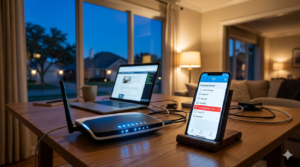
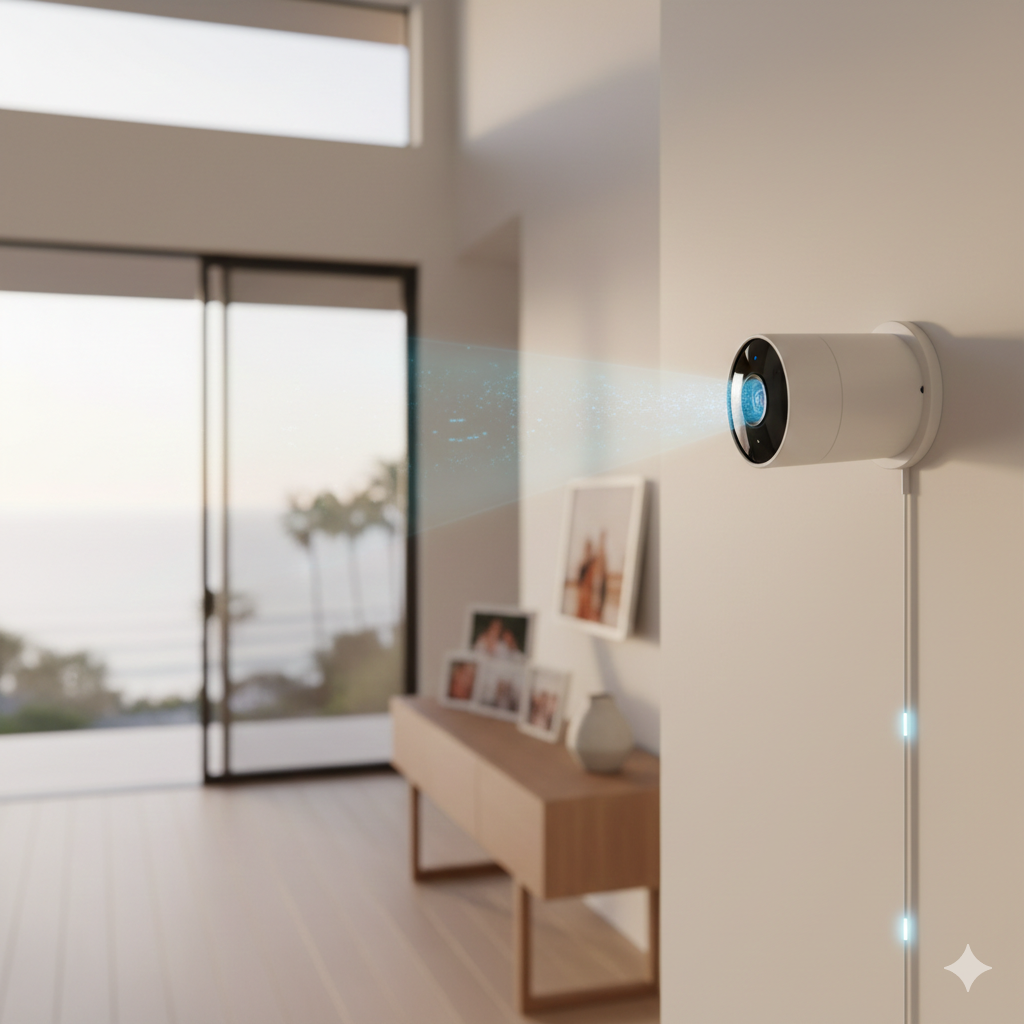
You installed them to feel safer. The smart cameras monitoring your property are there to watch for package thieves, check on your kids, or keep an eye on your Airbnb rental. You placed them on your front porch, in your living room, and maybe even in your child’s nursery, all for a little more peace of mind.
But what if someone else is watching through that same lens?
That isn’t a hypothetical question. In the first weeks of 2026, security researchers disclosed severe, actively exploited vulnerabilities affecting thousands of popular smart cameras in California homes. You pointed your cameras outward to watch for threats. You never considered that the threat might be looking back through the lens.
California leads the nation in smart home adoption, but this convenience comes with hidden risks. From high-density city apartments to sprawling suburban homes, our reliance on these connected devices has created a new, invisible entry point for attackers. With California’s privacy laws creating liability for homeowners whose cameras leak data, understanding this threat is no longer optional.
The Anatomy of a Camera Compromise: Three Ways They Get In
Hackers aren’t using complex, movie-style attacks. They are exploiting basic design flaws and unpatched software that leave the door wide open. Here are three real-world examples affecting California homes right now.
Method One: The Authentication Bypass (CVE-2026-0629)
This flaw affects 28 models of popular TP-Link VIGI cameras. It allows an attacker on your local network—which could be a neighbor in the next apartment—to reset your camera’s administrator password without any verification. They don’t need your old password or any special access.
What the attacker gains:
- Full administrative control to view live feeds, access recorded footage, and listen through the microphone.
- The ability to disable motion detection, change settings, or delete recordings.
- A perfect launchpad to attack other devices on your home network, like your laptop or smart lock.
TP-Link has released firmware updates, but these patches don’t install themselves. Unless you have manually checked and updated your cameras, they are likely still vulnerable to this camera authentication bypass.
Method Two: The Factory Backdoor (CVE-2021-47796)
Some cameras, like the Denver SHC-150, were shipped with a hardcoded username and password embedded directly into their software. This “backdoor” gives anyone who knows the credentials full root access to the camera’s underlying operating system.
Why this is catastrophic:
- These credentials are the same for every single device.
- The vendor has not released a patch to fix this fundamental flaw.
- The only way to protect against it is through careful home network segmentation and blocking dangerous ports.
Many of these cameras were sold on major online marketplaces and are still active in thousands of California homes today.
Method Three: The Airborne Attack (CVE-2025-65552 / CVE-2025-65553)
This attack targets the wireless signals used by some security systems, like the D3D Wi-Fi Home Security System. Because the system doesn’t use modern encryption or rolling codes, an attacker nearby can capture and replay signals.
What the attacker can do:
- Replay a “disarm” signal to disable your security system without your knowledge.
- Trigger false alarms to desensitize you to real alerts.
- Jam the wireless frequency, effectively blinding your system so it fails to report a real intrusion.
While this requires physical proximity, in California’s dense urban and suburban neighborhoods, an attacker in a parked car or an adjacent unit can easily be within range.
The Warning Signs: How to Know If Your Camera Has Been Compromised
Most people who have a smart camera hacked home network in California don’t realize it until it’s too late. Attackers prefer to remain silent. However, there are subtle IoT security breach signs you can look for.
Network-Level Signs:
- Unusual outbound connections from your camera to unknown IP addresses, especially in foreign countries.
- Your camera trying to connect to your network using insecure protocols like Telnet (port 23).
- Sudden spikes in your internet usage, which could indicate video footage is being uploaded.
Device-Level Signs:
- The camera’s indicator light (LED) behaves strangely, turning on or off when it shouldn’t.
- Settings like motion zones or recording schedules change on their own.
- Your admin password for the camera suddenly stops working.
- The camera occasionally moves, pans, or tilts without your command.
Most homeowners check their camera feeds. They look at what the camera sees. They never look at what the camera is doing. A compromised camera often looks exactly like a working one.
Why California Homes Are Ground Zero for This Threat
Several factors make California a prime target for these attacks.
- Density: In cities like San Francisco and Los Angeles, apartments and condos share walls and, often, network infrastructure. An attacker in a neighboring unit may already be on your local network, giving them the access needed to exploit a flaw like the TP-Link VIGI vulnerability patch you haven’t installed.
- The ADU Boom: California’s boom in accessory dwelling units (ADUs) means many properties have multiple households sharing a single, flat network. A tenant’s compromised device can become a pivot point into the main home’s network.
- Remote Property Management: Many Californians use cameras to monitor second homes or investment properties. These devices are often set up and forgotten, rarely updated, and sometimes exposed directly to the internet for easy remote viewing.
- The “Amazon Special” Problem: Low-cost, unbranded cameras are widely available online. These devices often lack basic security features, never receive firmware updates, and may even contain backdoors from the factory. The camera that cost you $29 on Prime Day may end up costing you everything.
The Zircon Solution: Camera Containment & Network Hardening
We Can’t Un-See What Happened. We Can Prevent It From Happening Again.
Zircon Technovatives does not investigate active breaches or offer emergency response. Our model is preventative. We perform scheduled, comprehensive remote security audits to find and fix these vulnerabilities before they can be exploited.
We use a three-tier framework to secure your home.
Tier One: Discovery & Vulnerability Assessment
First, we remotely scan your network to identify every connected camera and IoT device. We cross-reference your device models and firmware against active vulnerability databases to create a prioritized remediation roadmap.
Tier Two: Isolation & Network Segmentation
The root cause of many breaches is a flat network, where your camera can communicate with your laptop. We configure network segmentation (VLANs) to isolate your IoT devices. This creates a digital wall, so even if a camera is compromised, it cannot attack your other devices.
Tier Three: Firmware Remediation & Vendor Lockdown
For devices with available patches, we guide you through the update process and verify its success. For devices that are fundamentally insecure, we implement compensating controls and provide clear recommendations for replacement. We also disable dangerous, non-essential features that create unnecessary risk.
CRUCIAL DISCLAIMER: Zircon Technovatives provides scheduled, proactive remote security audits. We do not offer 24/7 emergency response or active breach investigation. If you believe your camera is actively compromised, disconnect it from your network immediately and contact local law enforcement. Then, call us to ensure it never happens again.
The Cost of Doing Nothing
Imagine a family in Sacramento whose unpatched camera is accessed by a curious neighbor. Or a Palm Springs Airbnb host whose guest data is stolen after an attacker pivots from an insecure exterior camera. These scenarios are real, and every single one is preventable—not with expensive hardware, but with a single, focused, professional audit.
Call to Action: The California Camera Security Audit
Don’t wait to become a statistic. Our 45-Minute IoT & Camera Network Risk Assessment is a remote audit designed to give you clarity and control.
- We discover all connected cameras and IoT devices on your network.
- We identify vulnerabilities, including those from the January 2026 disclosures.
- You receive a clear, written report with specific steps to contain the threat.
Secure My Cameras Before They’re Hacked.
Frequently Asked Questions:-
I have TP-Link VIGI cameras. How do I know if they’re vulnerable?
If you haven’t manually updated your firmware since January 2026, you should assume they are vulnerable. Our audit can verify the exact firmware version and test for the flaw directly.
I don’t see my camera brand listed. Am I safe?
Not necessarily. Many devices have undiscovered flaws. Proper network segmentation, which we help implement, protects you from both known and unknown vulnerabilities.
Can you do this remotely?
Yes, our service is 100% remote. We connect securely to your computer and guide you through any physical steps needed, while we handle the technical configuration.
I think my camera is already hacked. What should I do?
Immediately unplug the device from power and disconnect it from your network. Contact local law enforcement if you feel you are being surveilled. Once the immediate threat is contained, schedule a remote IoT security audit with us to secure your network.