Holiday shopping scams pick up every year. From Black Friday to New Year’s, more of us are shopping online, tracking packages and hunting for deals. Scammers know it. They time their tricks to the season, betting that a busy shopper will tap a link without a second look.
The good news: most holiday shopping scams follow a few familiar patterns. Once you know them, they’re much easier to spot.
1. Fake delivery texts
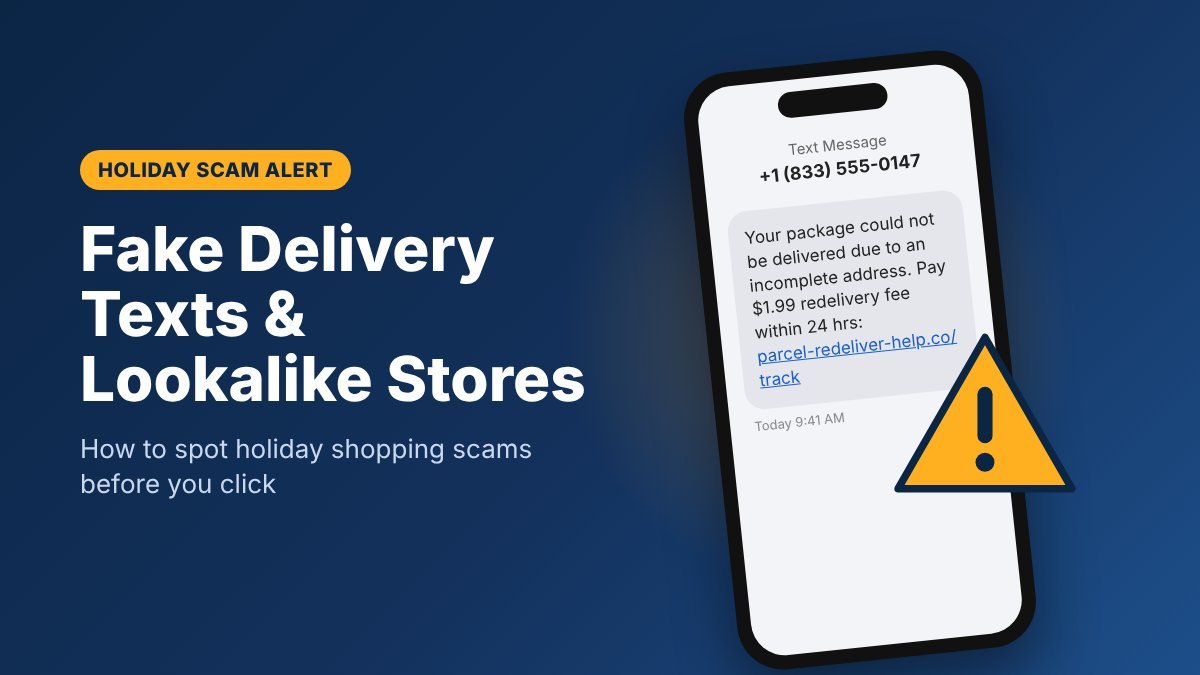
“USPS: Your package could not be delivered due to an incomplete address. Update here: [link]”
This is the most common of all holiday shopping scams. The text looks like it’s from USPS, UPS, FedEx or Amazon and asks you to pay a small “redelivery fee” or confirm your address. The link leads to a fake page that steals your card details or login.
Red flags:
- You weren’t expecting a package from that carrier
- The link is a strange web address, not the carrier’s real website
- It asks for a payment, however small
- It creates urgency: “within 24 hours” or “package will be returned”
What to do: Don’t tap the link. Open the carrier’s app or type its website yourself and enter the tracking number from your original order email.
2. Lookalike online stores
Scammers build websites that copy well-known brands, or invent stores with deep discounts on popular items. You pay, and the product never arrives, or a cheap fake shows up.
Red flags:
- Prices far below every other store
- A web address that’s slightly off, such as extra words, misspellings or an unusual ending
- No real contact details, return policy or company address
- Payment only by wire transfer, Zelle, gift card or cryptocurrency
What to do: Shop at stores you know, type their address yourself, and pay by credit card, which gives you stronger dispute protection than a debit card.
3. Too-good-to-be-true social media ads
Ads on Facebook, Instagram and TikTok for “90% off” gadgets or designer goods often lead to the same fake stores above. Comments on these ads can be fake too.
What to do: Search the store’s name plus “scam” or “reviews” before buying, and check how long its website has existed.
4. Gift card scams
Any message that asks you to pay with gift cards, whether it’s a “boss,” a “relative in trouble” or a “tech support” agent, is a scam. Legitimate businesses and government agencies don’t ask for payment in gift cards.
5. Fake order and account alerts
Emails or calls that say “Your Amazon order for a $999 iPhone has been placed. Call us to cancel” are designed to make you panic. The phone number connects you to a scammer, who may ask to remote into your computer.
What to do: Check your orders by logging into the store’s website or app directly. Never call a number in an unexpected message, and never let a stranger who contacted you remote into your computer.
Simple habits that stop most holiday shopping scams
- Track packages only through the carrier’s or store’s own app or website
- Type store addresses yourself instead of clicking links in ads, texts or emails
- Pay with a credit card or a trusted service like PayPal, never gift cards or wire transfers
- Turn on multi-factor authentication for email, Amazon and banking accounts
- Keep your phone, computer and browser updated
- Pause before acting on any message that feels urgent
Clicked a link or entered your details? Do this now
- Card details entered: call the number on the back of your card, report the charge and ask for a new card.
- Password entered: change it right away, and anywhere else you used the same password. Turn on multi-factor authentication.
- Something was downloaded or a stranger connected to your computer: disconnect from the internet and get the computer checked for malware.
- Report it: forward scam texts to 7726 (SPAM) and report fraud to the FTC at ReportFraud.ftc.gov.
- Watch your accounts: check bank and card statements closely for the next few weeks.
Related reading
- Bank or payment alerts after using your home laptop?
- How to tell if your computer has a virus
- Pop-ups won’t stop: is it a virus?
How Zircon can help
If you’re worried your computer or phone was compromised after one of these holiday shopping scams, Zircon Technovatives can check it remotely. We look for malware and unwanted remote-access software, secure your accounts and walk you through what to do next. For home users, our one-time fix is $69.99.
Not sure if a message or website is real? Contact Zircon Technovatives before you click. We’ll help you check.